Identify a High-Speed Bearing by Model and Code

A bearing marking and nominal size narrow a search; they do not confirm a replacement for a particular turbine. Record the following details before comparing a candidate part.
  1. Handpiece and assembly: Record the complete brand, model, suffix and turbine or cartridge reference. Different assembly versions can require different parts.
  2. Bearing position: Note the front or rear position if known. Check positions in the same assembly separately.
  3. Old bearing: Copy every character of the marking and photograph both faces if unclear. A missing suffix can change the candidate construction.
  4. Dimensions: Record inner diameter, outer diameter and width from a drawing or measured part, with the source noted. Nominal size narrows candidates but cannot confirm fit alone.
  5. Candidate specification: Request the exact proposed code and drawing, including documented ball and ring materials, cage, closure and service conditions. Compare this with the old part and handpiece documentation.

If a removed bearing is marked SR144TLK, SR144TLZ, SFR144 or SR144TLK-C, copy the full marking including any suffix. These are code labels to investigate, not a stock list or cross-brand fit chart.

Continue through the handpiece brand directory, return to the dental bearings guide, or request a part review.

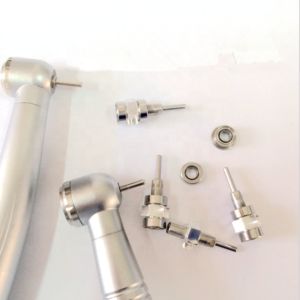
For a low-speed attachment, use the low-speed dental handpiece bearing guide and check the complete device model before reviewing parts.

Ceramic, Steel and Cage Choices

A hybrid ceramic bearing generally combines ceramic rolling elements with steel rings; an all-steel bearing uses steel rolling elements and rings. The term “ceramic bearing” by itself does not identify every component.

For an exact candidate, compare the documented ball and ring materials, cage, shield or seal arrangement, lubricant and service conditions. Material alone does not prove a longer service life, lower noise, sterilization suitability or fit in a particular handpiece. Follow the handpiece manufacturer’s service and reprocessing instructions.

Need Help Identifying a High-Speed Bearing?

Send the full handpiece model and suffix, turbine or cartridge reference, old bearing marking, front or rear position if known, and quantity. Attach a clear bearing photo or drawing using the contact form’s file field. Ask for the proposed part code, item specification, documented fit scope, availability and current quote.

FAQ for High Speed Dental Bearings

Does an ABEC or ISO precision class prove compatibility?
No. A precision class describes a tolerance category for a bearing. It does not establish the required geometry, construction, assembly position or fit for a particular handpiece. Ask for the exact candidate code and its specification before comparing it with the handpiece documentation.
There is no universal calendar interval. Noise, vibration, run-out or reduced performance can have several causes. Follow the handpiece manufacturer’s service instructions and inspect the assembly before deciding which part needs replacement.
No. A shared code family, nominal dimensions or photograph does not prove fit across models. Confirm the complete handpiece and cartridge version, the bearing position and a direct model-specific reference or documented fit validation.

To request a volume quote, send the complete handpiece model, candidate bearing code, quantity and delivery country through the contact form. Attach a photo or drawing if it helps identify the part. Request the exact item specification, documented fit scope, availability and current quotation terms for that item.

Scroll to Top

GET THE FREE QUOTE

Fill out the form below, and we will be in touch shortly.